
What Is Agnikarma?
Agnikarma, traditionally described as therapeutic cauterization or application of heat, is performed at selected sites using an appropriate method and instrument. It is distinct from general heat therapy.
A traditional Ayurvedic para-surgical procedure using therapeutic heat at selected sites.
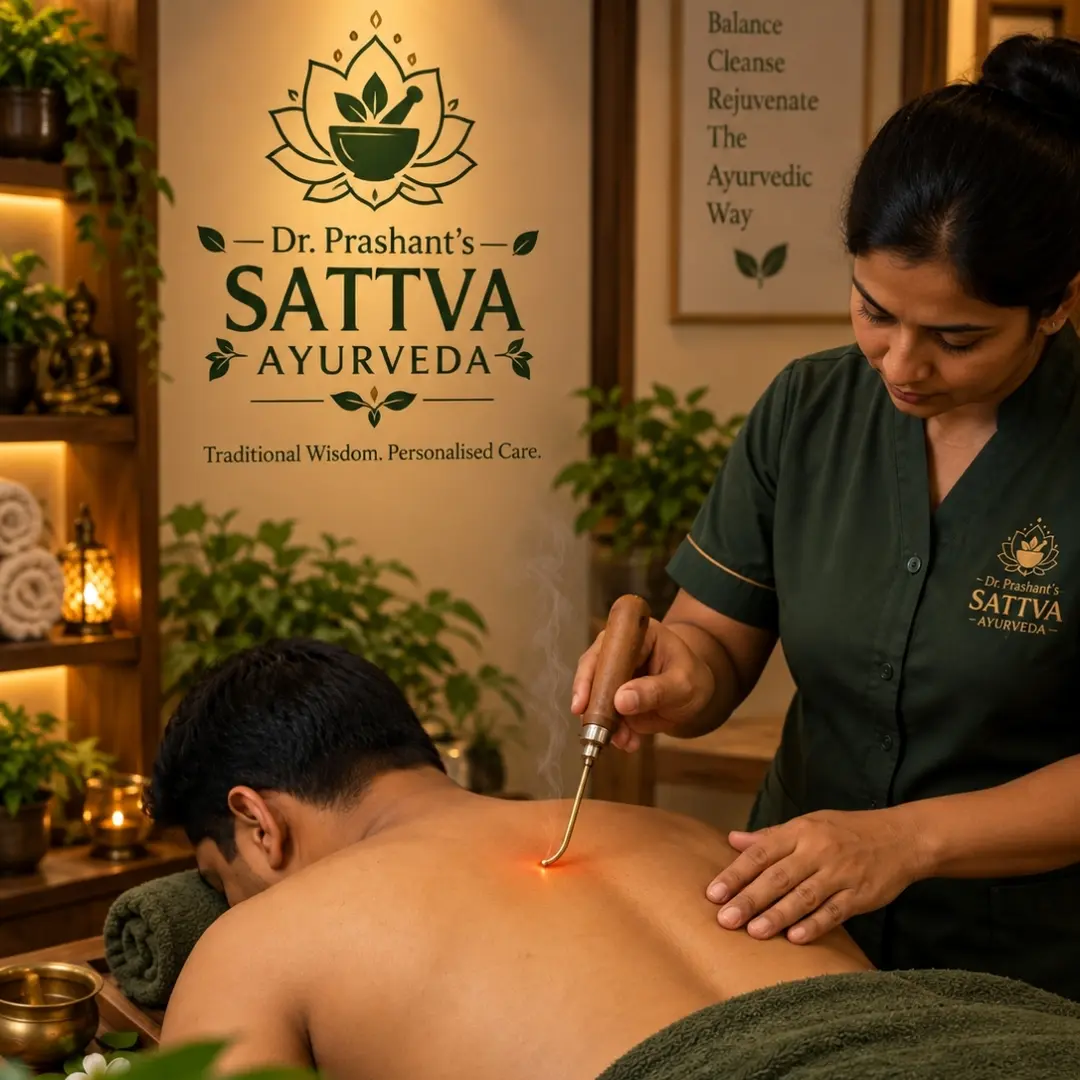
Agnikarma is a classical Ayurvedic procedure involving the controlled application of heat. It is described within Ayurvedic para-surgical practice and has also been studied in selected musculoskeletal conditions.
Agnikarma, traditionally described as therapeutic cauterization or application of heat, is performed at selected sites using an appropriate method and instrument. It is distinct from general heat therapy.
Clinical studies have investigated Agnikarma in selected musculoskeletal complaints, including lumbar spondylosis and tennis elbow. These studies are useful research signals, but they do not establish that Agnikarma is effective for every pain condition.
After assessment, the practitioner determines whether Agnikarma is appropriate, selects the site and technique, explains the procedure and provides post-procedure care instructions.
Agnikarma involves controlled thermal injury and therefore requires careful technique, appropriate patient selection, hygiene and aftercare. It should only be performed by a suitably trained practitioner.
Agnikarma is not a general-purpose pain cure. The available clinical evidence is condition-specific and remains limited; suitability should be assessed individually.
Agnikarma is a classical Ayurvedic procedure involving controlled application of therapeutic heat at selected sites.
No. Agnikarma is a specific traditional para-surgical procedure and should only be performed by an appropriately trained practitioner.
No. Suitability is condition-specific and should be assessed individually.